
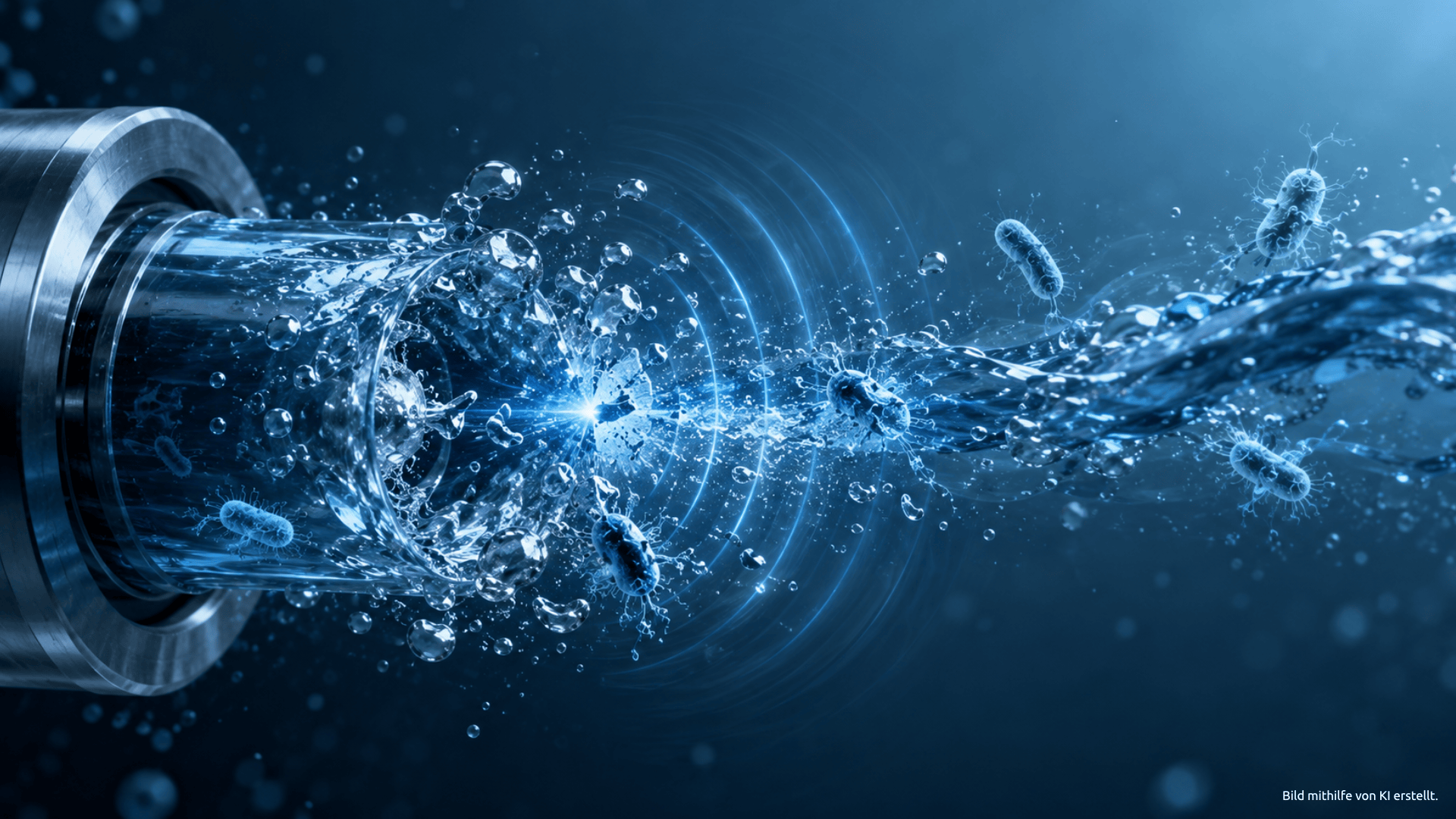

Part 5 | Cavitation – When Physics Meets Microorganisms
Controlled cavitation uses physical forces to specifically influence microorganisms in water.
Cavitation has a rather poor reputation in engineering. It can damage ship propellers, accelerate wear in pumps and cause significant damage to turbines. For decades, engineers have therefore tried to avoid this physical phenomenon wherever possible.
However, the forces generated in the process can do more than cause damage. When produced under controlled conditions, they can also be used specifically for technical processes.
Controlled cavitation is becoming increasingly important in water technology. It offers the possibility of influencing microorganisms through physical forces without adding chemical substances to the water.
What is cavitation?
Cavitation occurs when the pressure of a liquid briefly falls below its vapour pressure. This causes tiny vapour bubbles or cavities to form in the water.
When the pressure rises again immediately afterwards, these bubbles collapse within fractions of a millisecond. During this process, known as implosion, a large amount of energy is released within an extremely small area.
This can generate locally high pressures, intense shear forces and brief temperature peaks. However, these effects remain limited to microscopic areas and do not cause the water as a whole to heat up accordingly.
It is precisely these concentrated physical forces that make cavitation interesting for a wide range of technical and industrial applications.
A phenomenon known for decades
Cavitation is not a new discovery. The phenomenon has been studied for many decades and is already used technically in a variety of fields.
In addition to water technology, cavitation is used, for example, in ultrasonic cleaning, medical technology, industrial cleaning processes and various process engineering applications.
The fundamental physical mechanisms are therefore well researched. What is relatively new is the question of how these effects can be used specifically and under controlled conditions for hygiene-related applications in drinking water installations.
What happens to microorganisms?
Microorganisms have sensitive cellular structures. When exposed to the strong pressure changes and shear forces generated by controlled cavitation, their cell membranes can be mechanically affected or damaged.
Unlike chemical processes, this effect is not based on a chemical reaction with the water. The effect is generated solely by physical processes.
No additional active substances need to be added to the water for this purpose. Instead, the pressure and flow conditions generated within the water are deliberately used to produce the desired physical effects.
Physical processes as a complementary approach
For many decades, drinking water hygiene has primarily been shaped by thermal and chemical processes. Physical processes are now also receiving increasing attention.
The aim is not necessarily to replace established measures entirely. Rather, depending on the specific application, physical technologies can offer a complementary or alternative approach.
One advantage is that no disinfectant chemicals need to be added to the water. As a result, no disinfection by-products are formed that are directly attributable to the use of such chemicals. Their storage and dosing are also no longer required.
However, it is not possible to give a general answer as to which technology is suitable for a specific installation. The technical conditions, operating mode and respective hygiene requirements must always be taken into account.
Controlled generation is crucial
In order to make targeted use of the physical forces generated by cavitation, pressure conditions, flow velocity and system geometry must be carefully coordinated.
Even small changes can influence where cavitation occurs, how intense it is and what effect it produces within the system. Technical solutions for controlled cavitation can therefore differ significantly in their design and operating principles.
Not every visible formation of bubbles is automatically cavitation. Likewise, not every form of cavitation generates the same physical forces or produces a comparable effect.
For targeted applications, it is therefore essential to generate the process under defined and reproducible conditions.
A growing field of research
As interest in sustainable and resource-efficient processes continues to grow, research into physical water treatment is also expanding.
Cavitation is one of the technologies whose potential is currently being investigated for a range of applications. Research is focusing, among other things, on microbiological effectiveness, energy efficiency and technical integration into existing systems.
The question of how controlled cavitation can be reliably transferred to real operating conditions also plays an important role.
Current developments indicate that physical processes could play a greater role in future concepts for modern water treatment and water hygiene.
Conclusion
Cavitation is not a new physical phenomenon. What is new is primarily the targeted use of the forces it generates for hygiene-related applications in water technology.
Through the controlled formation and subsequent collapse of microscopic vapour bubbles, intense local pressure changes and shear forces are generated. These can affect microorganisms and their cellular structures without requiring chemical active substances to be added to the water.
Controlled cavitation therefore represents an interesting approach for modern water hygiene concepts. It demonstrates how a phenomenon that is undesirable in many technical applications can be deliberately harnessed under controlled conditions.
VISION AQUA® Umkehrosmoseanlagen und Wasserfilter
Average rating of 5 out of 5 stars
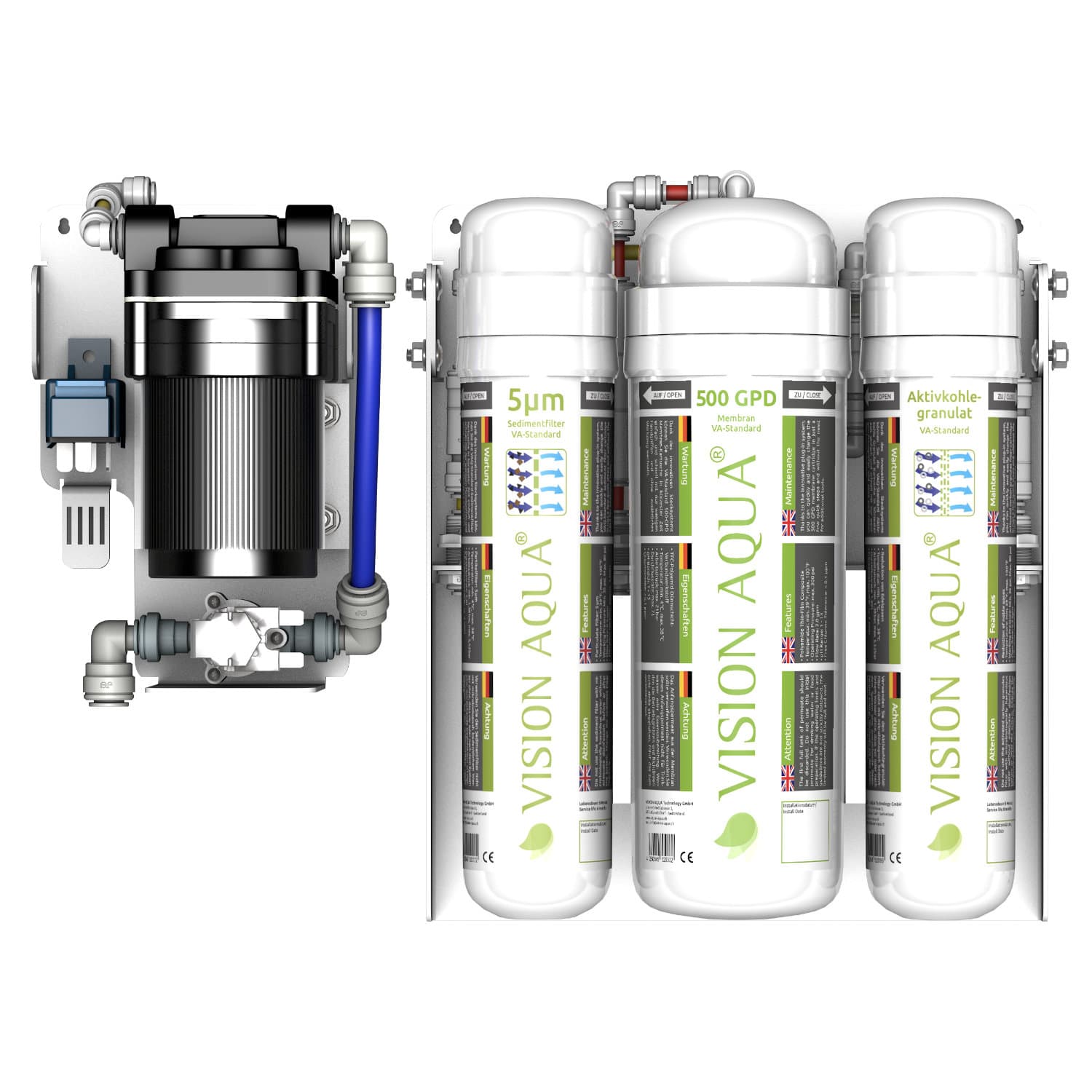
Scope of delivery:1 x VA Basic PLUS1 x VA-Standard - 500 GPD Membrane - Filmtec Material1 x VA-Standard - Sediment-Filter, PP cartridge (pre-filter)1 x VA Standard - Granulated Activated Carbon Filter, GAC Cartridge (post-filter)1 x Booster Pump 800 GPD - DirectDrive Brushles 24V - 2 x 3/8" tube outer diameter1 x Pressure switch - 1-10 Bar - 1/4" external thread - stainless-steel (incl. clamp for assembly)1 x installation set1 x 1-way tap, tap with straight connector - 1/4" tube external diameter (set)Hints!The system is delivered dry and has not been flushed!The system must first have produced 10-15 liters of water before it can be used for drinking water production.
Average rating of 5 out of 5 stars
Scope of delivery:1 x VA Basic PLUS1 x VA-Standard - 500 GPD Membrane - Filmtec Material1 x VA-Standard - Sediment-Filter, PP cartridge (pre-filter)1 x VA Standard - Granulated Activated Carbon Filter, GAC Cartridge (post-filter)1 x Booster Pump 800 GPD - DirectDrive Brushles 24V - 2 x 3/8" tube outer diameter1 x Pressure switch - 1-10 Bar - 1/4" external thread - stainless-steel (incl. clamp for assembly)1 x DC converter SD-100A-24 - 24V / 4.2A - Mean Well1 x installation set1 x 1-way tap, tap with straight connector - 1/4" tube external diameter (set)Hints!The system is delivered dry and has not been flushed!The system must first have produced 10-15 liters of water before it can be used for drinking water production.

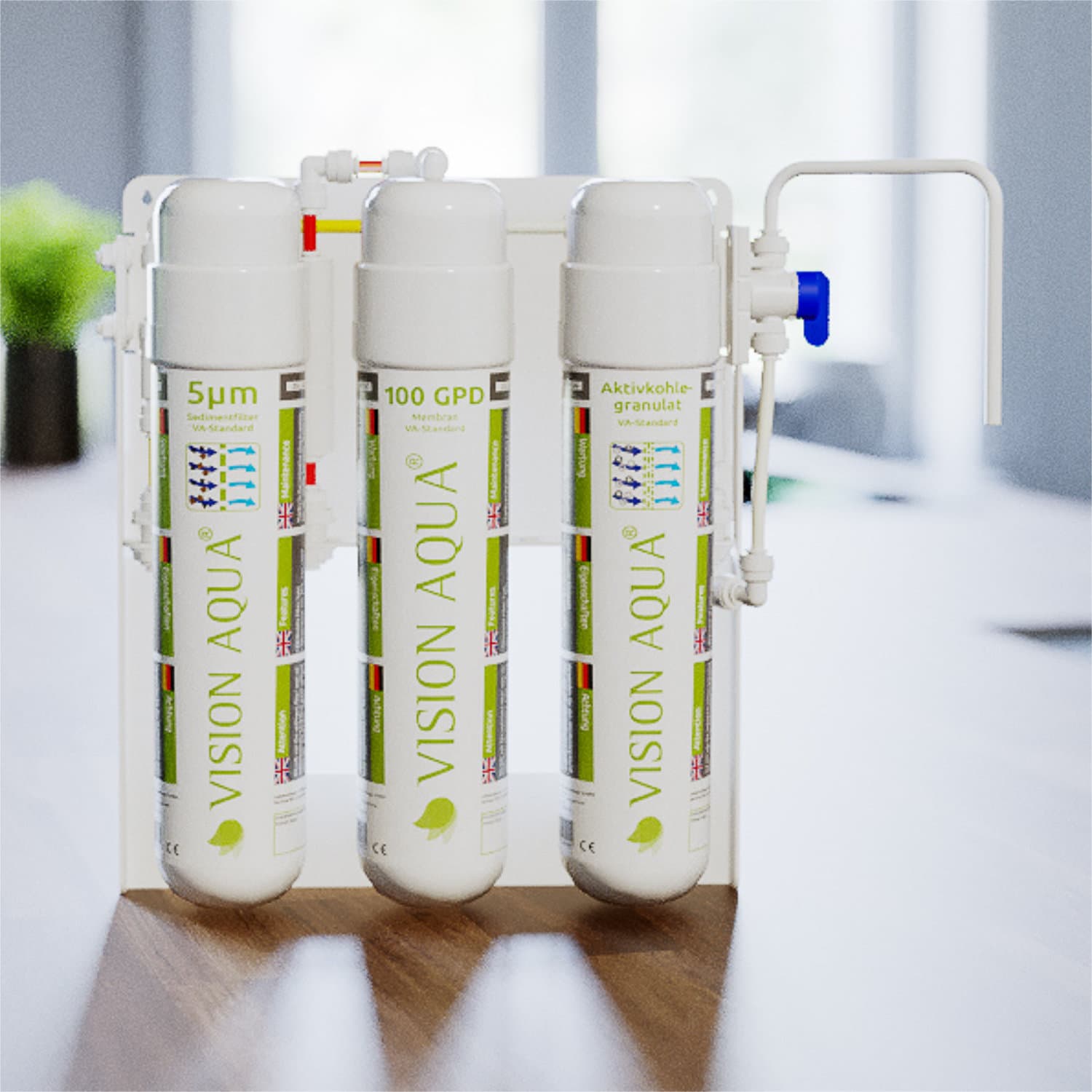
Scope of delivery:1 x VA Basic1 x VA-Standard - 100 GPD Membrane - Filmtec Material1 x VA-Standard - Sediment-Filter, PP cartridge1 x VA Standard - Granulated Activated Carbon Filter, GAC Cartridge1 x Plastic tube for inlet - 1/4", 6.35 mm - color: yellow - John Guest, length: 2 m1 x Plastic tube for waste water - 1/4", 6.35 mm - color: red - John Guest, length: 2 m1 x Tap connector adapter with aerator and return for wastewater - M22 inner thread to 1/41 x M24 AG to M22 AG long version - water filter faucet adapter1 x M24 AG to M22 AG - water filter faucet adapter1 x 1/4" tap with stainless steel folding spout3 x filter cap - suitable for VA standard filter cartridgeHints!The system is delivered dry and has not been flushed!The system must first have produced 10-15 liters of water before it can be used for drinking water production.
Weitere Blogbeiträge zum Thema Trinkwasser
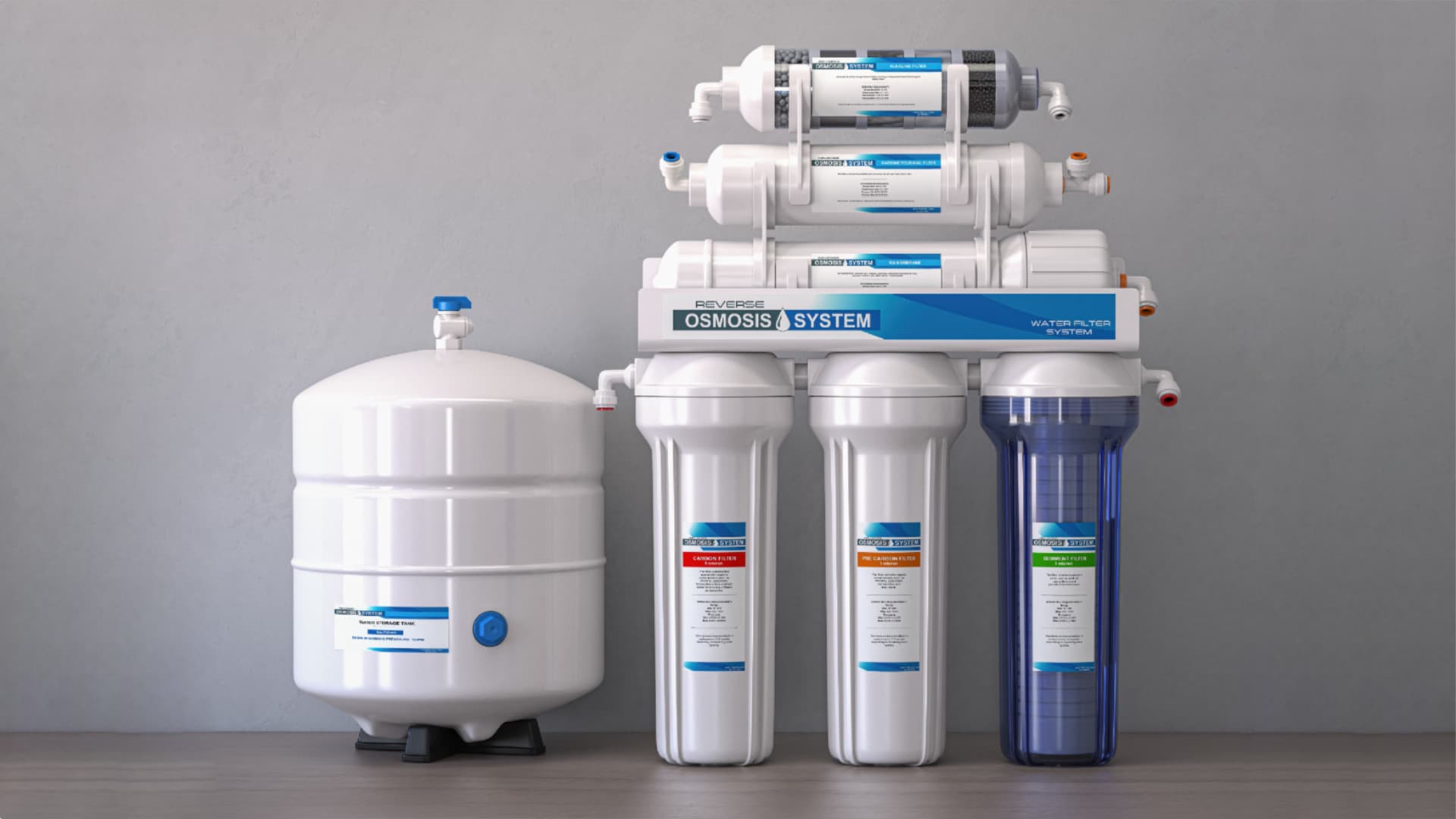
Die Umkehrosmoseanlage
Wasser wissen
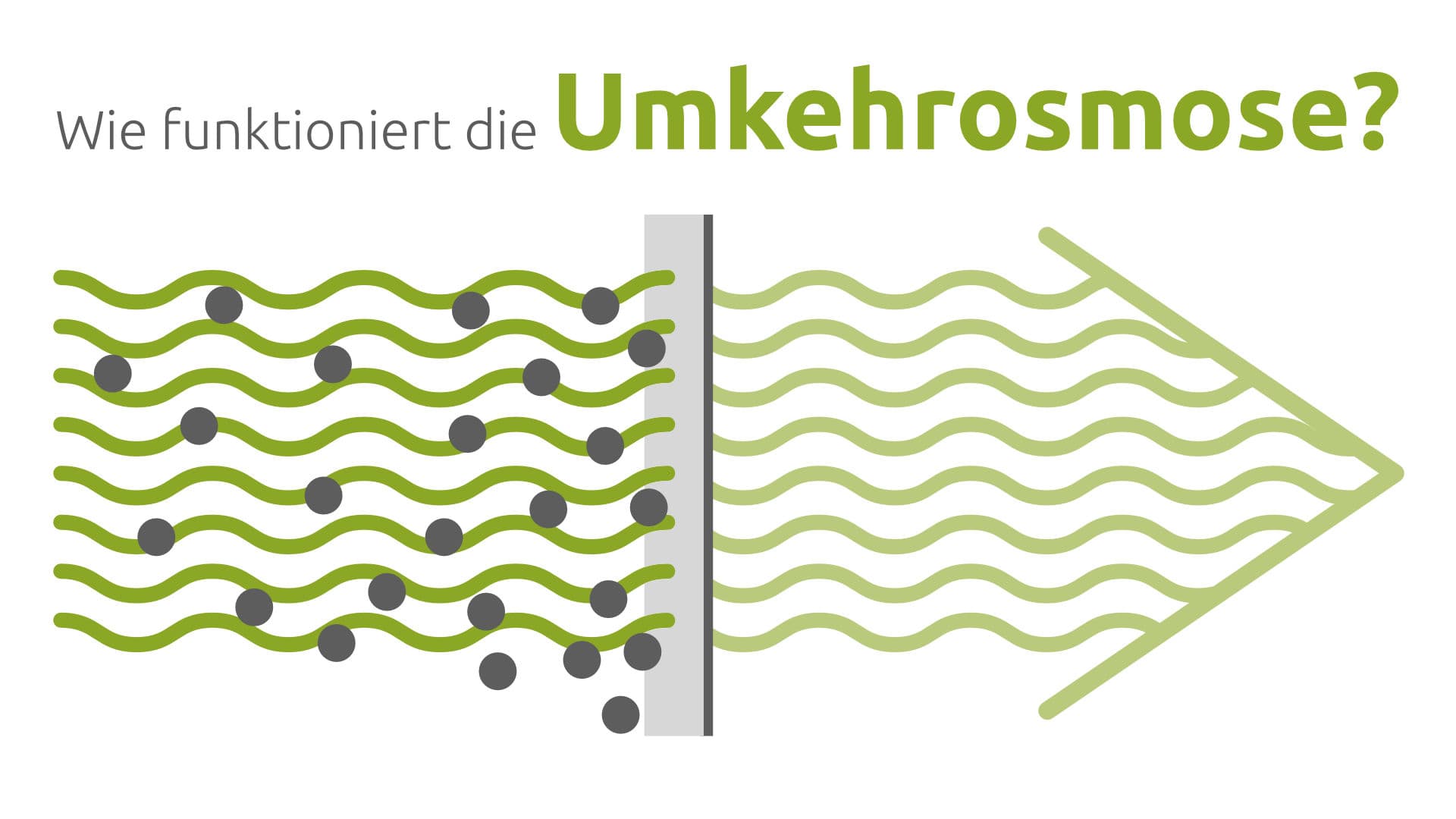
Wie funktioniert die Umkehrosmose?
Wasser wissen
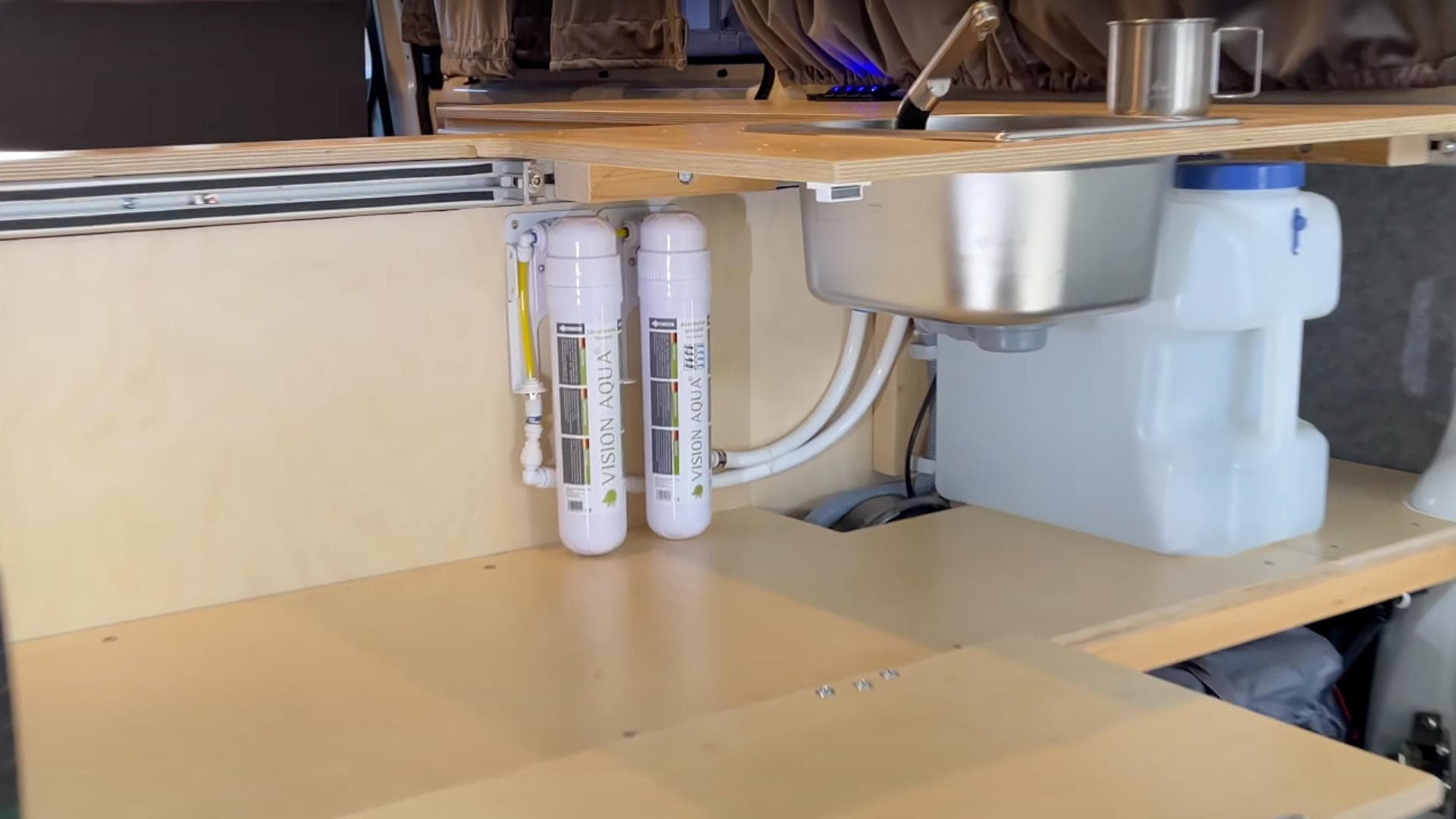
Wasserfilter für Wohnmobile und Camper
Mobile Wasserfilter für Wohnmobile und Camping
Bleiben Sie auf dem Laufenden!

