

Part 3 | Stagnation – The Underestimated Enemy of Every Drinking Water Installation
Stagnation changes drinking water unnoticed. Why regular use is essential for hygiene.
When we turn on a tap, we expect fresh, clean and hygienically safe drinking water. But what happens to the water when it is not used for hours or even days?
Experts in drinking water hygiene, microbiology and building services engineering have been addressing this question for many years. It is becoming increasingly clear that the amount of time water remains within technical installations can have a significant impact on the microbiological stability of a system.
What does stagnation mean?
Stagnation occurs when water remains in pipes, fittings, storage vessels or other parts of a system for an extended period and is not regularly replaced.
Such situations occur more frequently than might initially be assumed. They can arise, for example, in rarely used guest rooms, holiday apartments or vacant buildings. Reserve pipes, oversized pipe networks, seasonally used buildings and pipe sections that are no longer required can also contribute to extended water retention times.
Practical experience has long shown that the properties of water can change during this period.
What happens to water during stagnation?
Water is not a static medium. Even if it appears unchanged from the outside, numerous physical, chemical and microbiological processes take place within a pipe system.
During longer periods of stagnation, the temperature of the water can change, for example. Oxygen levels and nutrient availability can also be affected. At the same time, certain substances from the materials used in the installation may migrate into the water. In addition, the composition of the microorganisms present in the water can change.
The effects of these processes in individual cases depend on numerous factors. Many of these interactions remain the subject of scientific research today.
The role of biofilms
Today, it is widely accepted that biofilms form in virtually all drinking water installations. These are complex communities of microorganisms that colonise the inner surfaces of pipes and fittings.
According to current understanding, extended water retention times can influence the development and stabilisation of these microbial communities. The extent of this influence and which factors are particularly important continue to be the subject of intensive research.
What is clear, however, is that the microbial quality of a drinking water installation does not depend solely on the water itself. Rather, it is determined by the interaction of technical, chemical and biological conditions.
Why are hot water systems particularly demanding?
Hot water and circulation systems place particularly high demands on the design, operation and monitoring of an installation.
In these systems, several influencing factors often interact simultaneously. These include elevated temperatures, complex pipe networks, different usage patterns, temporary stagnation and various materials. In addition, the surface area of the installation can be very large in relation to the volume of water it contains.
For this reason, particularly in larger buildings such as hotels, hospitals, care facilities or administrative buildings, special requirements apply to drinking water hygiene.
Is regular flushing enough?
Regular replacement of the water is considered an important measure for maintaining hygienically stable conditions. At the same time, researchers and practitioners have been examining for many years which flushing intervals are actually appropriate and effective under specific conditions.
There is no universally applicable answer. Temperature, water quality, material properties, frequency of use and microbiological processes all influence one another.
There is therefore growing recognition that no single measure is equally suitable for every building and every usage situation. Flushing measures can make an important contribution, but they must always be considered in the context of the entire system.
Water hygiene is a system-wide task
Experience in recent years has shown that drinking water hygiene cannot be reduced to individual parameters.
Several factors are essential for maintaining stable hygienic conditions over the long term. These include regular water replacement, suitable temperatures and well-designed hydraulic conditions. Avoiding dead legs, selecting suitable materials and operating the entire installation as intended are equally important.
Only when these factors are properly coordinated can stable conditions be maintained over the long term.
Conclusion
Stagnation is one of the most significant influencing factors in modern drinking water installations. At the same time, current scientific discussion shows that the interactions between water replacement, biofilms and microbiological stability are considerably more complex than was long assumed.
Research is therefore focusing intensively on how technical water systems should be designed and operated in order to maintain stable and hygienically safe conditions over the long term.
The more we learn about the invisible processes taking place within our drinking water installations, the clearer it becomes that water hygiene is not a one-time condition. Rather, it is an ongoing process that requires a lasting understanding and consistent control of complex interactions.
VISION AQUA® Umkehrosmoseanlagen und Wasserfilter
Average rating of 5 out of 5 stars
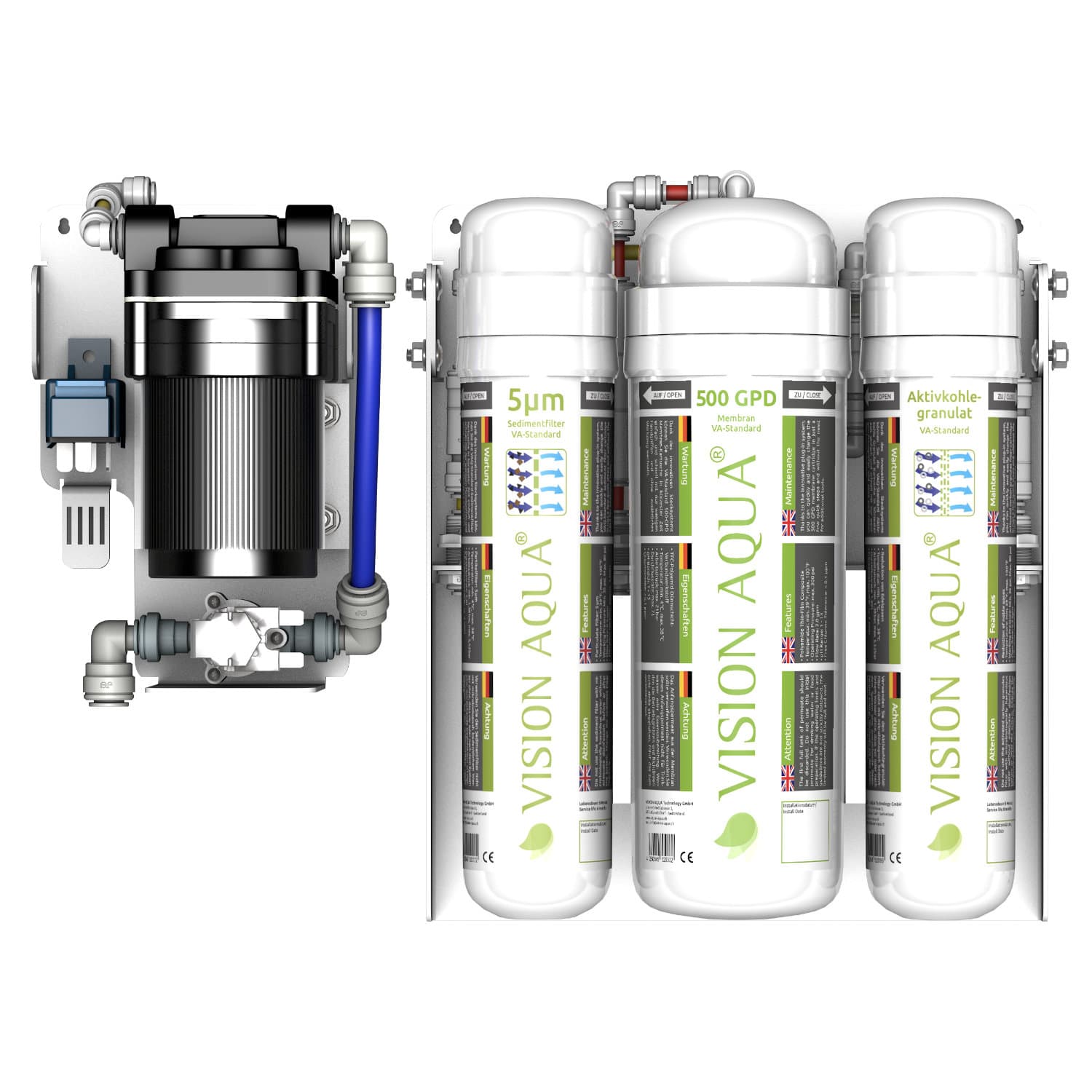
Scope of delivery:1 x VA Basic PLUS1 x VA-Standard - 500 GPD Membrane - Filmtec Material1 x VA-Standard - Sediment-Filter, PP cartridge (pre-filter)1 x VA Standard - Granulated Activated Carbon Filter, GAC Cartridge (post-filter)1 x Booster Pump 800 GPD - DirectDrive Brushles 24V - 2 x 3/8" tube outer diameter1 x Pressure switch - 1-10 Bar - 1/4" external thread - stainless-steel (incl. clamp for assembly)1 x installation set1 x 1-way tap, tap with straight connector - 1/4" tube external diameter (set)Hints!The system is delivered dry and has not been flushed!The system must first have produced 10-15 liters of water before it can be used for drinking water production.
Average rating of 5 out of 5 stars
Scope of delivery:1 x VA Basic PLUS1 x VA-Standard - 500 GPD Membrane - Filmtec Material1 x VA-Standard - Sediment-Filter, PP cartridge (pre-filter)1 x VA Standard - Granulated Activated Carbon Filter, GAC Cartridge (post-filter)1 x Booster Pump 800 GPD - DirectDrive Brushles 24V - 2 x 3/8" tube outer diameter1 x Pressure switch - 1-10 Bar - 1/4" external thread - stainless-steel (incl. clamp for assembly)1 x DC converter SD-100A-24 - 24V / 4.2A - Mean Well1 x installation set1 x 1-way tap, tap with straight connector - 1/4" tube external diameter (set)Hints!The system is delivered dry and has not been flushed!The system must first have produced 10-15 liters of water before it can be used for drinking water production.

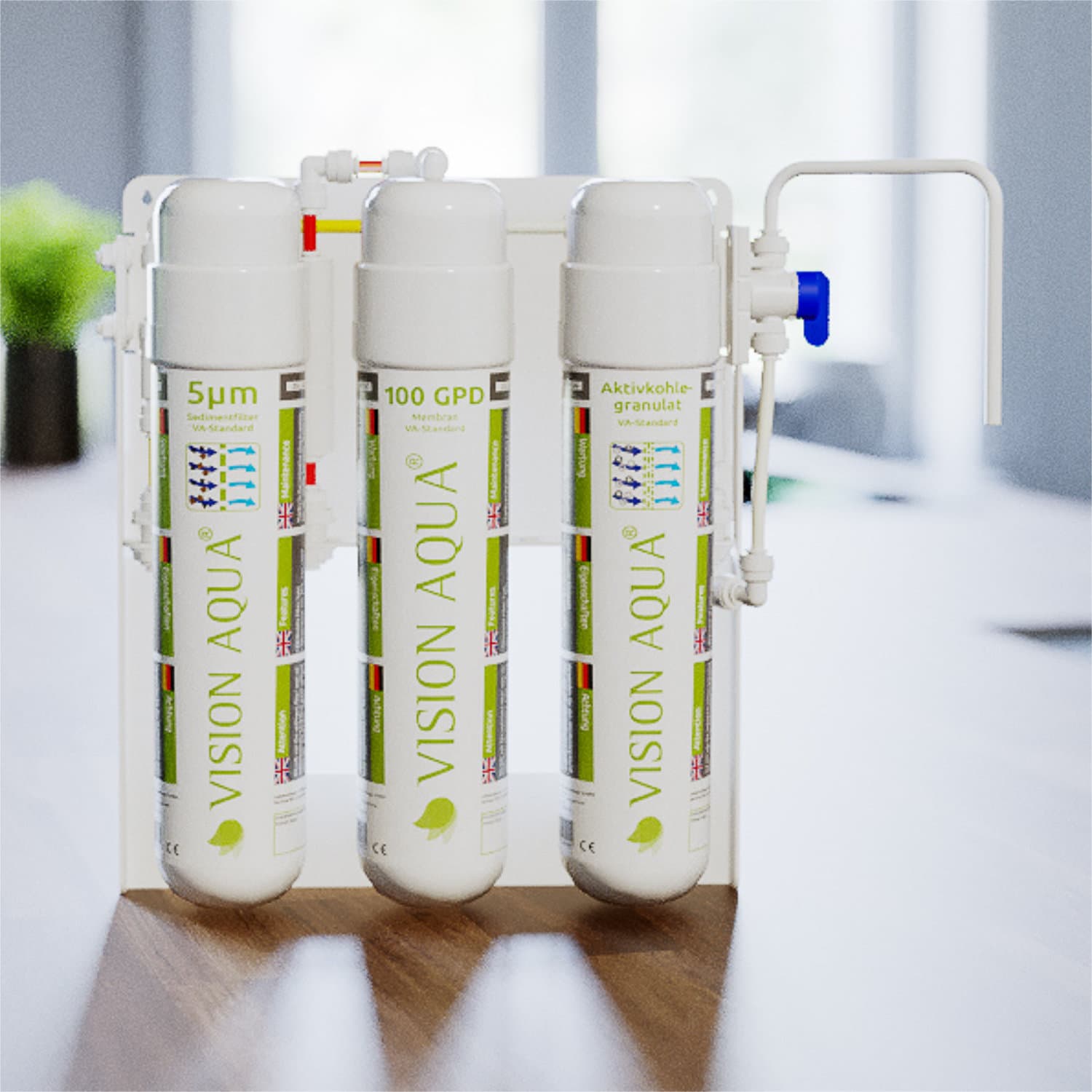
Scope of delivery:1 x VA Basic1 x VA-Standard - 100 GPD Membrane - Filmtec Material1 x VA-Standard - Sediment-Filter, PP cartridge1 x VA Standard - Granulated Activated Carbon Filter, GAC Cartridge1 x Plastic tube for inlet - 1/4", 6.35 mm - color: yellow - John Guest, length: 2 m1 x Plastic tube for waste water - 1/4", 6.35 mm - color: red - John Guest, length: 2 m1 x Tap connector adapter with aerator and return for wastewater - M22 inner thread to 1/41 x M24 AG to M22 AG long version - water filter faucet adapter1 x M24 AG to M22 AG - water filter faucet adapter1 x 1/4" tap with stainless steel folding spout3 x filter cap - suitable for VA standard filter cartridgeHints!The system is delivered dry and has not been flushed!The system must first have produced 10-15 liters of water before it can be used for drinking water production.
Weitere Blogbeiträge zum Thema Trinkwasser
Magen-Darm-Erkrankungen im Fassatal
Wasserabkochmeldungen

Wienerwald-Gemeinde kämpft mit verunreinigtem Trinkwasser
Wasserabkochmeldungen

Trinkwasser in Reichenfels verunreinigt
Wasserabkochmeldungen
Bleiben Sie auf dem Laufenden!

