
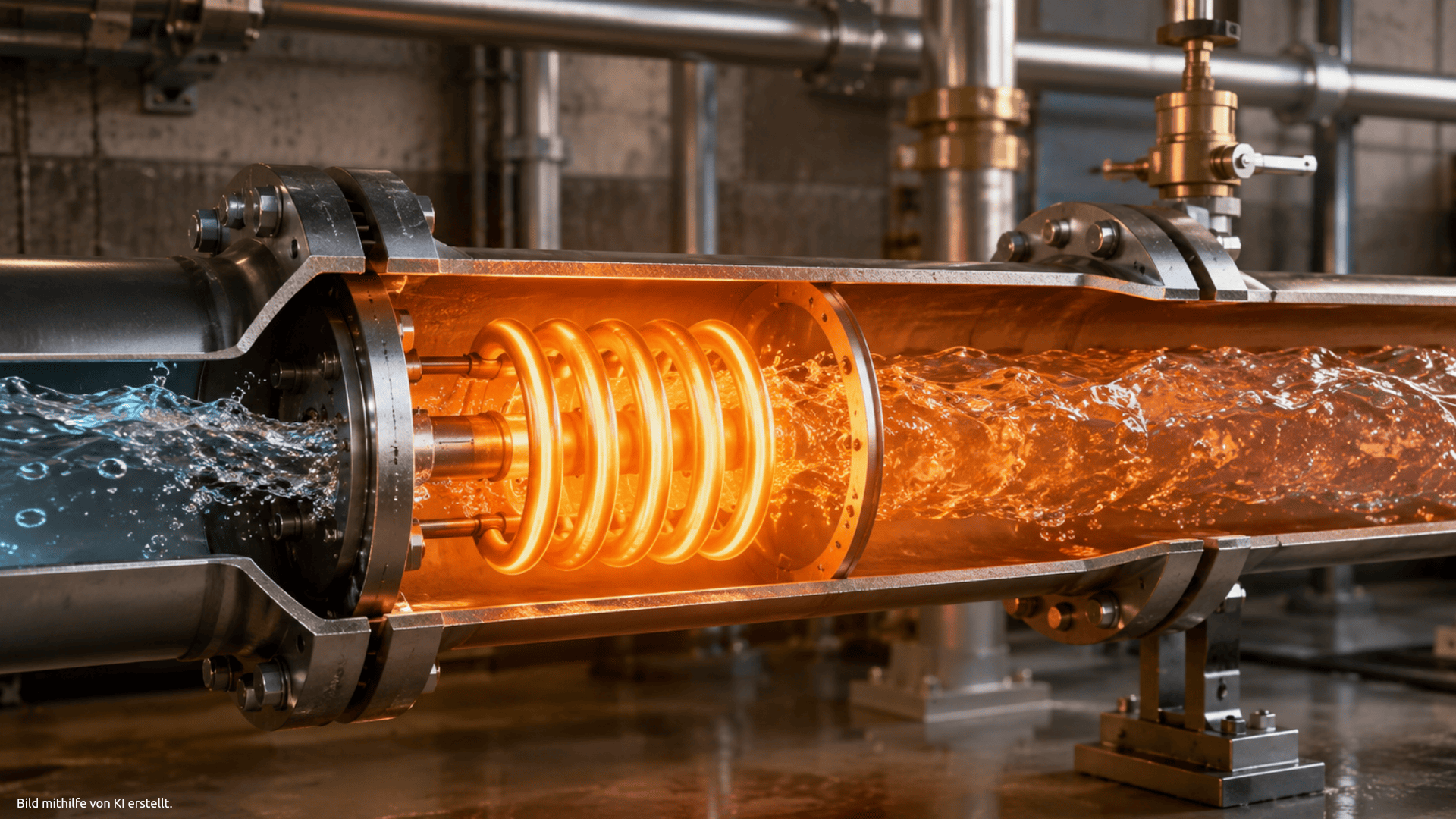

Part 4 | Why Thermal Disinfection Does Not Always Achieve the Desired Effect
"Then we’ll simply increase the water temperature."
Hardly any measure is mentioned more frequently in connection with Legionella than thermal disinfection. For many years, it has been one of the recognised methods used in drinking water hygiene and has been successfully applied in numerous buildings.
The principle initially seems simple. High temperatures are intended to kill Legionella and other microorganisms, thereby restoring the hygienic safety of the drinking water installation.
In practice, however, thermal disinfection does not always lead to long-term success. In many buildings, Legionella is detected again after some time despite repeated measures. The key question is therefore not whether thermal disinfection works in principle. What matters is why it does not provide a permanent solution in some installations.
Heat only works where it actually reaches
Legionella is sensitive to high temperatures. If the required temperatures are reached throughout the entire hot water system and maintained for a sufficient period of time, the number of bacteria can be significantly reduced.
This, however, is precisely where one of the greatest challenges lies.
Drinking water installations consist of a complex network of pipes, storage vessels, circulation lines, fittings and outlets. For thermal disinfection to be successful, the required temperatures must be reached at every point within the system. This also applies to rarely used pipe sections and hydraulically unfavourable areas.
Even individual points where the temperature does not rise sufficiently can allow microorganisms to survive and later multiply again.
Legionella does not only live in water
Another important aspect is often underestimated. Only some Legionella bacteria are freely suspended in the water. Their primary habitat is predominantly within biofilms.
These are thin, slime-like layers that can form on virtually all water-contact surfaces within a drinking water installation. Biofilms consist of various microorganisms, organic substances and a protective matrix. Within this complex habitat, Legionella can find favourable conditions.
Thermal disinfection initially acts primarily on the water. However, microorganisms within deeper layers of a biofilm can, to some extent, be protected from external influences. This means that individual bacteria may survive and multiply again after disinfection.
The underlying cause often remains
In the previous part of this article series, we already looked at the importance of stagnation.
When water remains in a pipe for an extended period, factors such as temperature, oxygen levels and nutrient availability can change. These conditions can promote the formation of biofilms and therefore also support the growth of Legionella.
Thermal disinfection can reduce the existing microbial load. However, it does not automatically eliminate the causes that led to its development.
If areas of stagnation remain or individual pipes continue to be used only rarely, favourable conditions for the growth of microorganisms can develop again within a relatively short period of time.
Thermal disinfection is a measure, but not a complete concept
Thermal disinfection is undoubtedly one of the important tools used in drinking water hygiene. In many situations, it can be useful or necessary.
However, long-term drinking water hygiene cannot be achieved through a single measure alone. What matters is the hygienically safe operation of the entire drinking water installation.
This includes avoiding stagnation, ensuring sufficient flow through all pipe sections and maintaining stable temperatures. Equally important are hydraulically balanced circulation, regular use of all outlets and continuous monitoring of operating conditions.
Only the interaction of these factors can create permanently unfavourable conditions for Legionella and other microorganisms.
The focus is increasingly shifting towards prevention
With the introduction of water safety plans, a preventive approach is becoming increasingly important.
Instead of responding exclusively to microbiological contamination that has already occurred, potential risks are intended to be identified at an early stage and minimised on a long-term basis. The aim is to prevent hygiene problems from developing in the first place wherever possible.
This also changes the role of thermal disinfection. It remains an important component of drinking water hygiene, but is increasingly understood as part of a comprehensive hygiene concept rather than as a stand-alone solution.
Conclusion
Thermal disinfection is a proven and recognised method for reducing microbiological contamination in hot water installations.
Its success, however, depends largely on whether the required temperatures are actually reached throughout the entire system. At the same time, the causes of microbial growth must be identified and addressed on a long-term basis.
If biofilms, areas of stagnation or unfavourable operating conditions remain, Legionella can multiply again.
Sustainable drinking water hygiene therefore does not begin with disinfection alone. It starts with a drinking water installation that is hygienically designed, properly operated and continuously monitored.
VISION AQUA® Umkehrosmoseanlagen und Wasserfilter
Average rating of 5 out of 5 stars
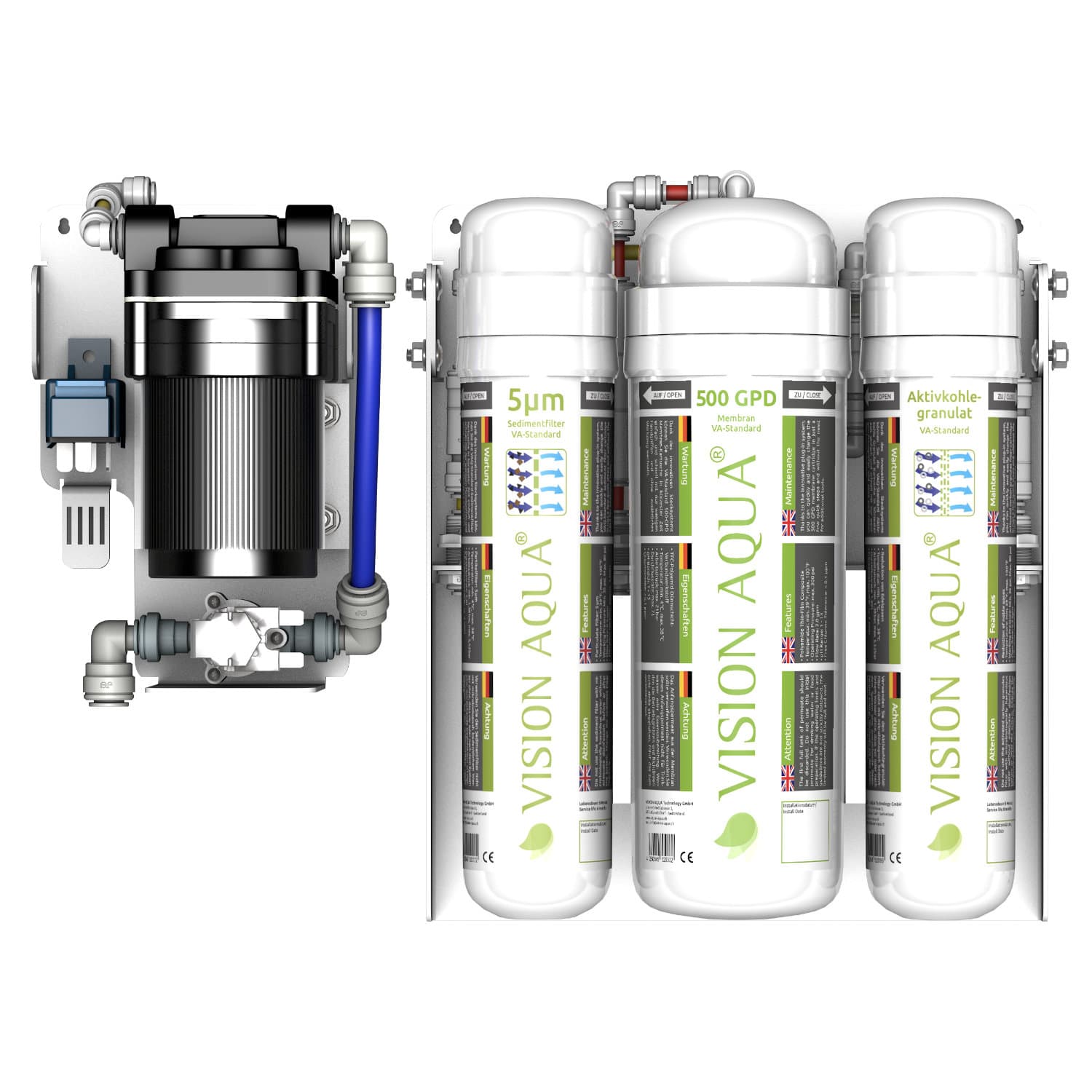
Scope of delivery:1 x VA Basic PLUS1 x VA-Standard - 500 GPD Membrane - Filmtec Material1 x VA-Standard - Sediment-Filter, PP cartridge (pre-filter)1 x VA Standard - Granulated Activated Carbon Filter, GAC Cartridge (post-filter)1 x Booster Pump 800 GPD - DirectDrive Brushles 24V - 2 x 3/8" tube outer diameter1 x Pressure switch - 1-10 Bar - 1/4" external thread - stainless-steel (incl. clamp for assembly)1 x installation set1 x 1-way tap, tap with straight connector - 1/4" tube external diameter (set)Hints!The system is delivered dry and has not been flushed!The system must first have produced 10-15 liters of water before it can be used for drinking water production.
Average rating of 5 out of 5 stars
Scope of delivery:1 x VA Basic PLUS1 x VA-Standard - 500 GPD Membrane - Filmtec Material1 x VA-Standard - Sediment-Filter, PP cartridge (pre-filter)1 x VA Standard - Granulated Activated Carbon Filter, GAC Cartridge (post-filter)1 x Booster Pump 800 GPD - DirectDrive Brushles 24V - 2 x 3/8" tube outer diameter1 x Pressure switch - 1-10 Bar - 1/4" external thread - stainless-steel (incl. clamp for assembly)1 x DC converter SD-100A-24 - 24V / 4.2A - Mean Well1 x installation set1 x 1-way tap, tap with straight connector - 1/4" tube external diameter (set)Hints!The system is delivered dry and has not been flushed!The system must first have produced 10-15 liters of water before it can be used for drinking water production.

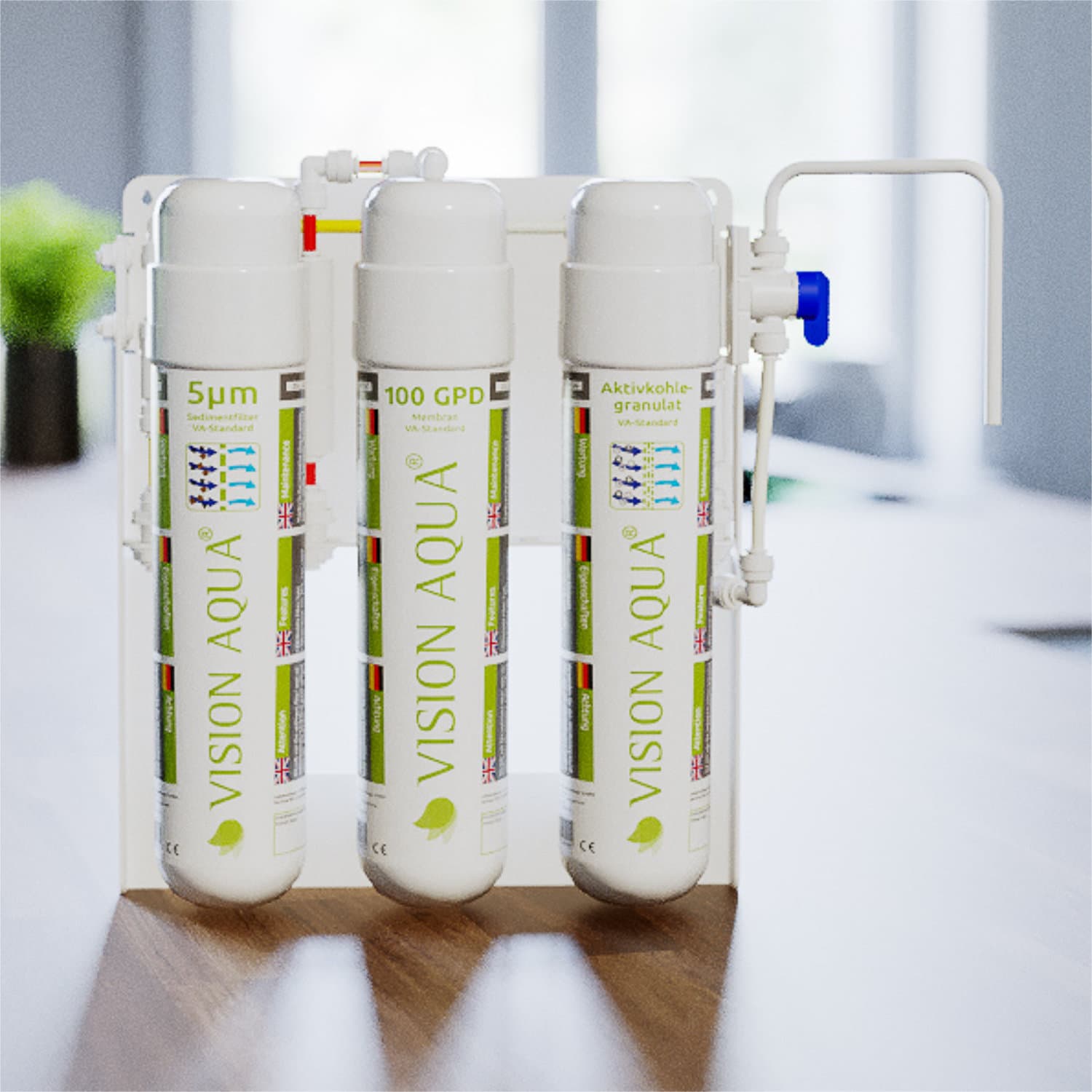
Scope of delivery:1 x VA Basic1 x VA-Standard - 100 GPD Membrane - Filmtec Material1 x VA-Standard - Sediment-Filter, PP cartridge1 x VA Standard - Granulated Activated Carbon Filter, GAC Cartridge1 x Plastic tube for inlet - 1/4", 6.35 mm - color: yellow - John Guest, length: 2 m1 x Plastic tube for waste water - 1/4", 6.35 mm - color: red - John Guest, length: 2 m1 x Tap connector adapter with aerator and return for wastewater - M22 inner thread to 1/41 x M24 AG to M22 AG long version - water filter faucet adapter1 x M24 AG to M22 AG - water filter faucet adapter1 x 1/4" tap with stainless steel folding spout3 x filter cap - suitable for VA standard filter cartridgeHints!The system is delivered dry and has not been flushed!The system must first have produced 10-15 liters of water before it can be used for drinking water production.
Weitere Blogbeiträge zum Thema Trinkwasser
Abkochgebot für Trinkwasser in mehreren Gemeinden
Wasserabkochmeldungen

Trinkwasserverschmutzung im Rems-Murr-Kreis
Wasserabkochmeldungen

Warnung vor Trinkwasserverschmutzung im Kreis Northeim
Wasserabkochmeldungen
Bleiben Sie auf dem Laufenden!

