

Part 2 | The Invisible World of Biofilms
Drinking water pipes are never sterile. Why biofilms are normal and when they can become problematic.
What we cannot see can still affect us
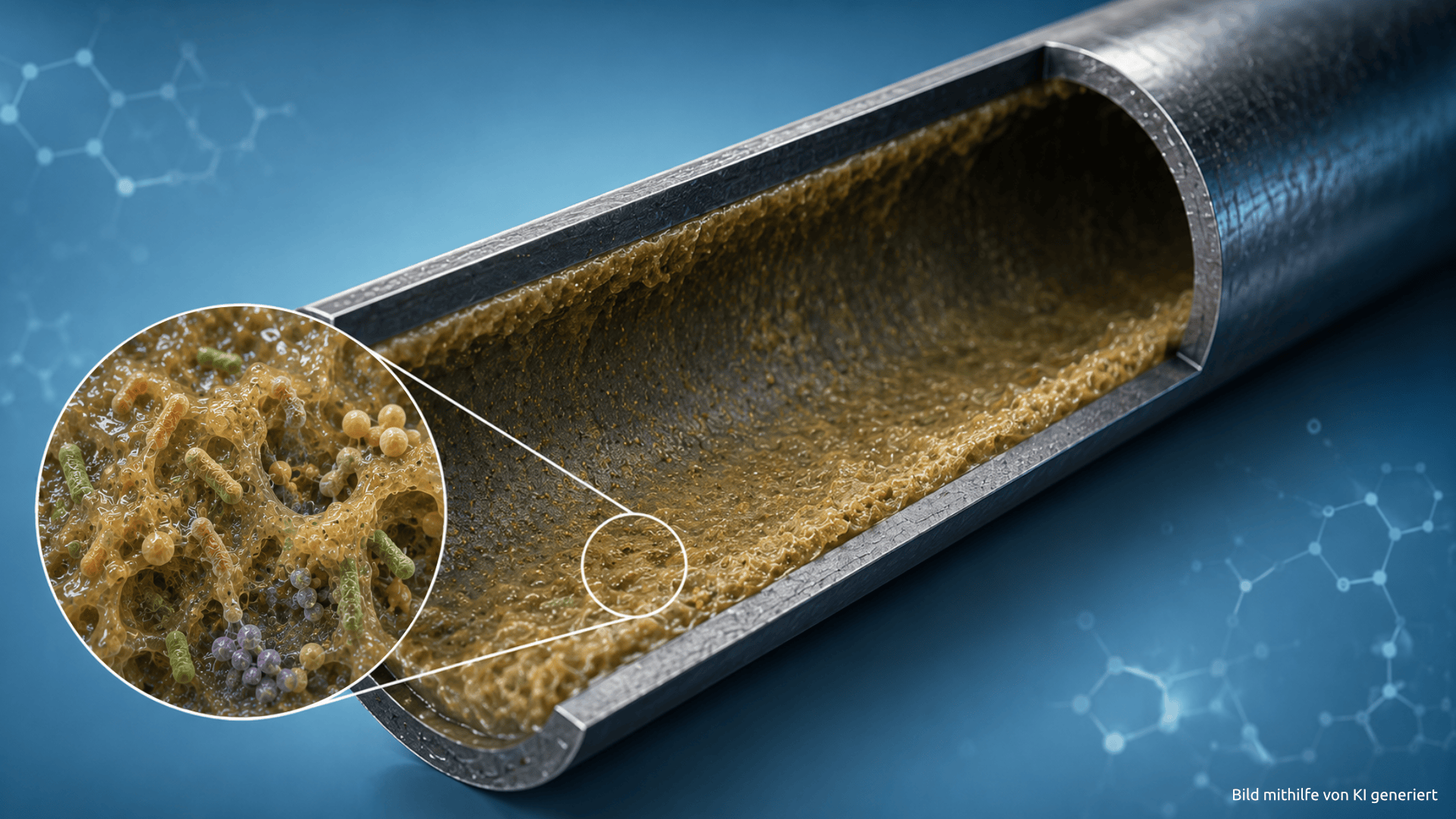
When we turn on a tap, we expect clear, clean and hygienically safe drinking water. What many people do not realise, however, is that biological layers can form over time on the inner surfaces of many water-bearing systems. These layers are known as biofilms.
The mere presence of a biofilm is not evidence of poor hygiene or an inadequate installation. It only becomes problematic when operating conditions develop that favour undesirable microorganisms.
Important context
The presence of biofilm does not automatically mean that drinking water is unsafe. Drinking water does not need to be sterile, but it must be safe for human health and comply with applicable requirements. The key is for a drinking water installation to be properly designed, operated, maintained and used regularly.
What is a biofilm?
A biofilm is a collection of microorganisms that settle on surfaces and form a protective matrix of biological substances. This matrix consists of various organic compounds. It acts like a protective shield, helping to protect the microorganisms from external influences.
Biofilms can form on virtually all materials used in water-bearing systems. These include stainless steel, copper, plastic pipes, seals, fittings, heat exchangers, tanks and storage vessels.
Shortly after a surface comes into contact with water, the first organic substances can begin to accumulate. This forms what is known as a conditioning layer. It provides the basis for microorganisms to colonise the surface later on.
Info Box: What is a biofilm?In brief: Interesting facts: An initial conditioning layer can begin to form within just a few hours. Biofilms can develop on virtually all materials, including stainless steel. A large proportion of the microorganisms in water systems are not freely suspended in the water, but are found within biofilms. The composition of a biofilm changes continuously and is strongly influenced by temperature, flow velocity and nutrient availability. |
Why do biofilms form in the first place?
In practice, drinking water is not sterile. Even high-quality drinking water contains small amounts of naturally occurring microorganisms as well as dissolved organic substances. When suitable conditions are present, biofilms can develop.
Their formation is particularly encouraged in areas where water flows only slowly or remains stagnant for extended periods. Unfavourable temperatures, rough surfaces, dead legs and infrequently used outlets can also contribute to creating better growth conditions for microorganisms.
Particularly in complex buildings with extensive hot water and circulation systems, areas can therefore develop in which biofilms find especially favourable conditions for growth.
Why can biofilms become problematic?
Most microorganisms within a biofilm are initially harmless to humans. However, problems can arise when undesirable or potentially pathogenic microorganisms establish themselves within this protected environment.
These include Legionella, Pseudomonas and other water-associated microorganisms. Biofilms can provide them with protected niches where they are better shielded than microorganisms freely suspended in the water.
The particular challenge is that the protective matrix of a biofilm can reduce or delay the effects of many external influences. In certain cases, this can make microorganisms more resistant to disinfection measures than microorganisms that are freely suspended in the water.
Why biofilms cannot simply be flushed away
A common misconception is that a short-term increase in temperature or a one-time disinfection can permanently eliminate biofilms.
In reality, biofilms are complex and dynamic microbial communities. Even if some of the microorganisms are reduced, the biological structure can develop again under suitable conditions.
For this reason, modern hygiene concepts do not focus solely on controlling individual microorganisms. Increasing attention is being paid to the entire microbiological environment within the system. The decisive factor is not simply whether a particular microorganism is detected, but whether the conditions within the system favour its growth.
Biofilms are not a defect, but a technical challenge
The recognition that biofilms are widespread in water-bearing installations has led to a shift in thinking in recent years.
The aim of modern water hygiene is not the unrealistic concept of a completely sterile pipe system. Far more important is preventing critical microbiological developments at an early stage, optimising operating conditions, avoiding stagnation and improving the long-term microbiological stability of the entire system.
This also changes the way drinking water installations are viewed. They are not merely technical systems made up of pipes, fittings and storage vessels. They are also habitats in which physical, chemical and biological processes interact.
Conclusion
Biofilms are among the least visible yet most important factors in drinking water hygiene. They are neither unusual nor inherently dangerous. However, they do represent a challenge that requires a sound understanding of the biological and physical processes within water systems.
Anyone seeking to improve water hygiene sustainably must therefore look beyond individual microorganisms. What matters is the entire ecological system within a drinking water installation.
Because sometimes, what is invisible determines the safety of what we can see.
VISION AQUA® Umkehrosmoseanlagen und Wasserfilter
Average rating of 5 out of 5 stars
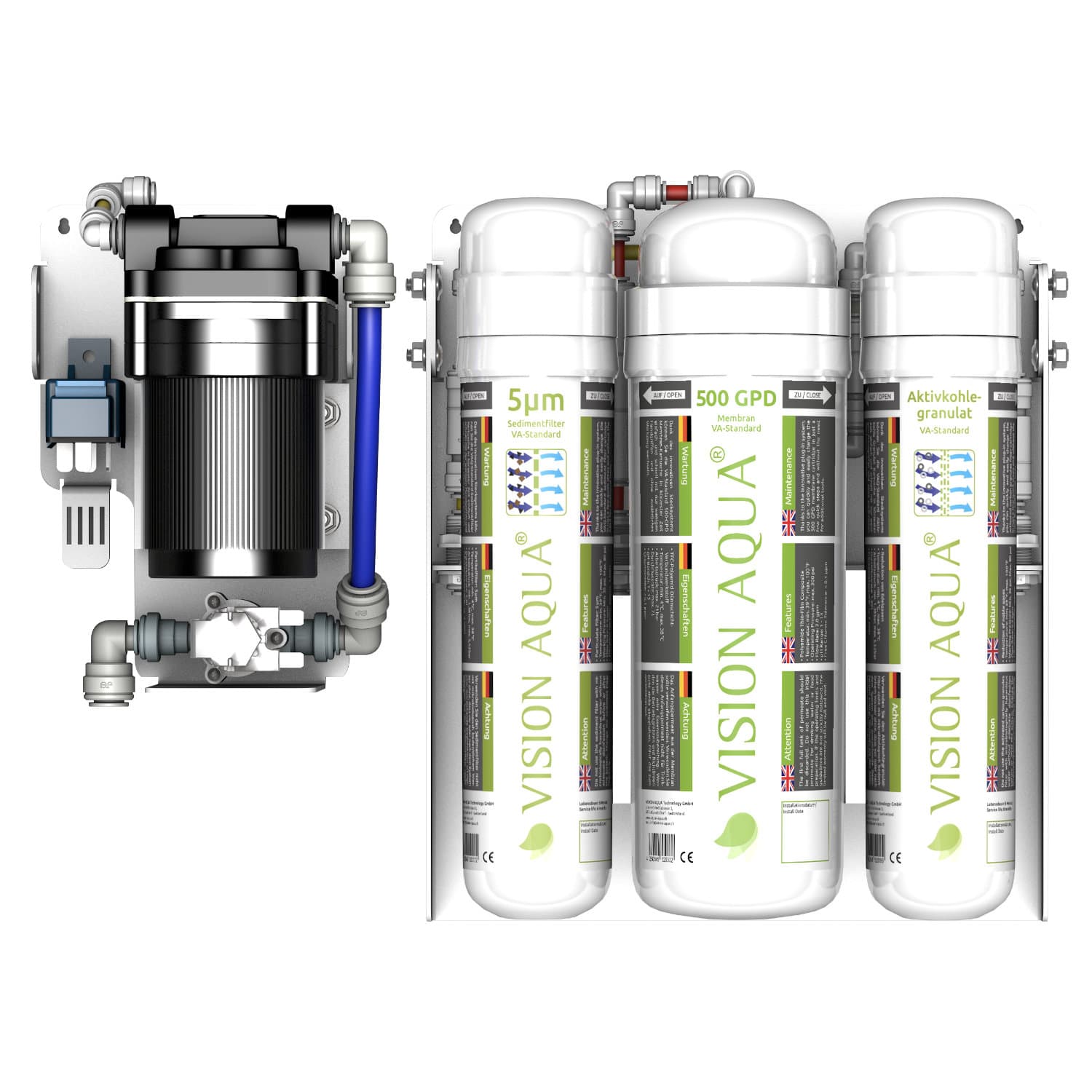
Scope of delivery:1 x VA Basic PLUS1 x VA-Standard - 500 GPD Membrane - Filmtec Material1 x VA-Standard - Sediment-Filter, PP cartridge (pre-filter)1 x VA Standard - Granulated Activated Carbon Filter, GAC Cartridge (post-filter)1 x Booster Pump 800 GPD - DirectDrive Brushles 24V - 2 x 3/8" tube outer diameter1 x Pressure switch - 1-10 Bar - 1/4" external thread - stainless-steel (incl. clamp for assembly)1 x installation set1 x 1-way tap, tap with straight connector - 1/4" tube external diameter (set)Hints!The system is delivered dry and has not been flushed!The system must first have produced 10-15 liters of water before it can be used for drinking water production.
Average rating of 5 out of 5 stars
Scope of delivery:1 x VA Basic PLUS1 x VA-Standard - 500 GPD Membrane - Filmtec Material1 x VA-Standard - Sediment-Filter, PP cartridge (pre-filter)1 x VA Standard - Granulated Activated Carbon Filter, GAC Cartridge (post-filter)1 x Booster Pump 800 GPD - DirectDrive Brushles 24V - 2 x 3/8" tube outer diameter1 x Pressure switch - 1-10 Bar - 1/4" external thread - stainless-steel (incl. clamp for assembly)1 x DC converter SD-100A-24 - 24V / 4.2A - Mean Well1 x installation set1 x 1-way tap, tap with straight connector - 1/4" tube external diameter (set)Hints!The system is delivered dry and has not been flushed!The system must first have produced 10-15 liters of water before it can be used for drinking water production.

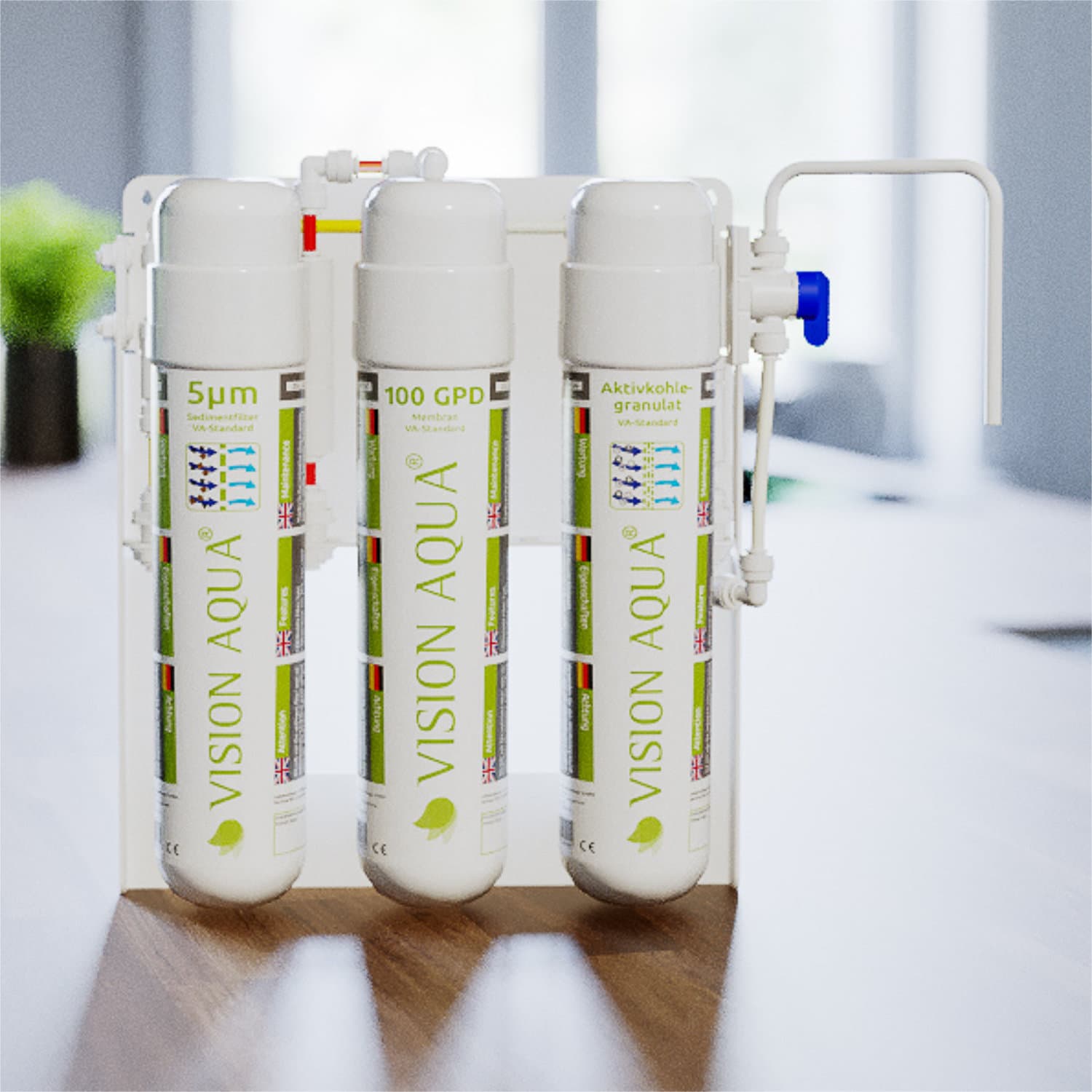
Scope of delivery:1 x VA Basic1 x VA-Standard - 100 GPD Membrane - Filmtec Material1 x VA-Standard - Sediment-Filter, PP cartridge1 x VA Standard - Granulated Activated Carbon Filter, GAC Cartridge1 x Plastic tube for inlet - 1/4", 6.35 mm - color: yellow - John Guest, length: 2 m1 x Plastic tube for waste water - 1/4", 6.35 mm - color: red - John Guest, length: 2 m1 x Tap connector adapter with aerator and return for wastewater - M22 inner thread to 1/41 x M24 AG to M22 AG long version - water filter faucet adapter1 x M24 AG to M22 AG - water filter faucet adapter1 x 1/4" tap with stainless steel folding spout3 x filter cap - suitable for VA standard filter cartridgeHints!The system is delivered dry and has not been flushed!The system must first have produced 10-15 liters of water before it can be used for drinking water production.
Weitere Blogbeiträge zum Thema Trinkwasser
Abkochgebot für Trinkwasser in mehreren Gemeinden
Wasserabkochmeldungen

Trinkwasserverschmutzung im Rems-Murr-Kreis
Wasserabkochmeldungen

Warnung vor Trinkwasserverschmutzung im Kreis Northeim
Wasserabkochmeldungen
Bleiben Sie auf dem Laufenden!

