
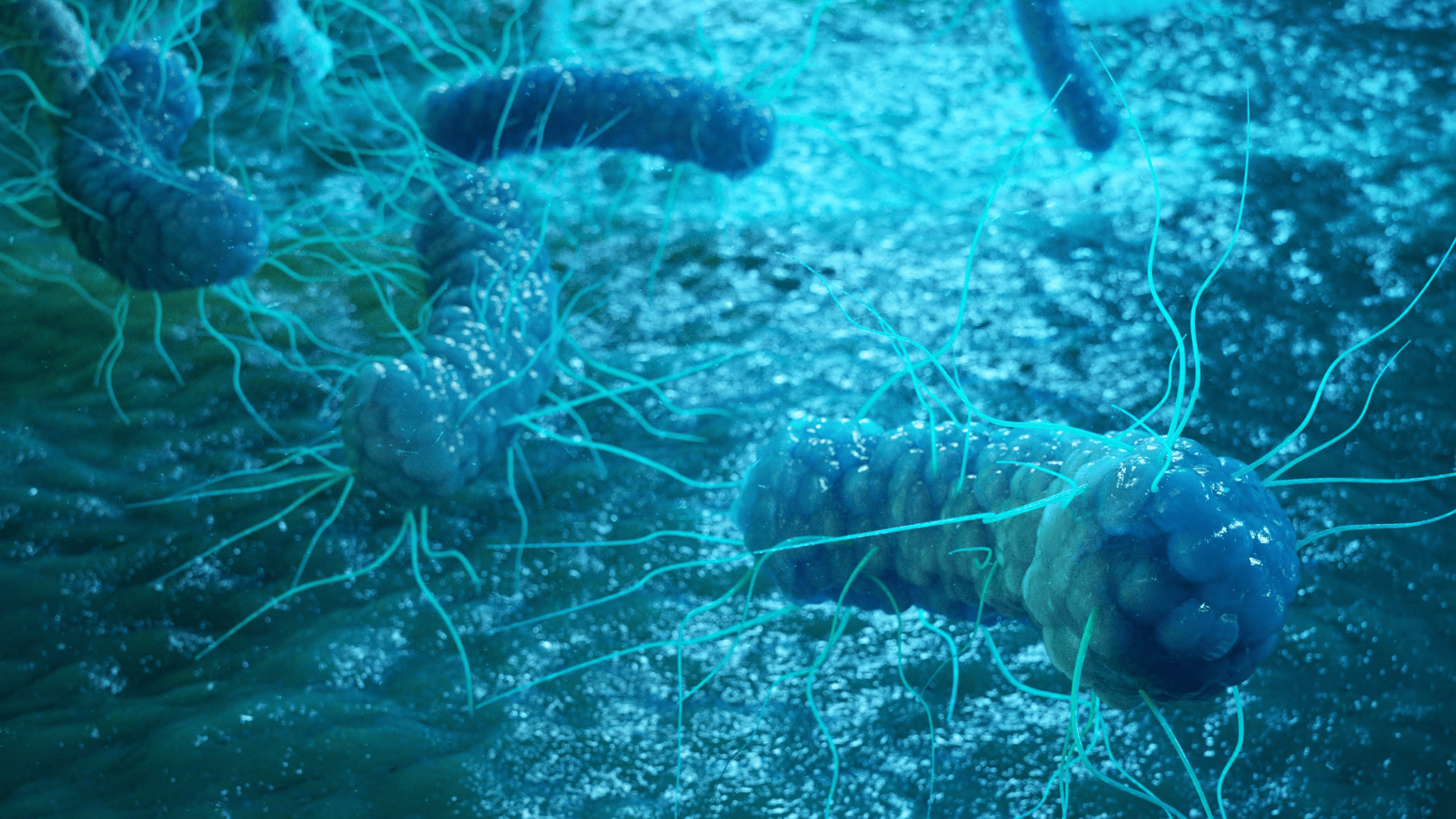

Part 1 | Legionella and Biofilms – Persistent in Water Systems
Why the problem runs deeper and what role biofilms play in water systems.
Legionella are among the best-known bacteria associated with drinking water hygiene. Regular media coverage as well as statutory testing and reporting requirements have significantly increased awareness of these microorganisms in recent years.
Nevertheless, the same question arises time and again in practice: Why does Legionella contamination recur in some buildings even after measures have already been implemented?
A significant part of the answer lies in a world that is invisible to the human eye. This refers to biofilms.
What is Legionella
Legionella are naturally occurring waterborne bacteria. In low concentrations, they can be detected in many freshwater environments and generally do not pose a problem there.
The situation only becomes critical when the bacteria multiply within technical water systems and are inhaled through tiny water droplets. These droplets are known as aerosols and can be generated, for example, when showering.
People who are particularly at risk include older adults, individuals with weakened immune systems, patients in hospitals and care facilities, as well as people with chronic illnesses.
Why does Legionella find ideal conditions in buildings?
Within buildings, Legionella can encounter conditions that promote its growth. These include prolonged periods of stagnation, insufficient water movement, complex pipe networks, dead legs and certain temperature ranges.
When several of these factors occur together, what initially appears to be an inconspicuous microbiological presence can develop into a hygiene-related problem. The decisive factor is not simply the presence of individual bacteria, but the interaction of conditions throughout the entire installation.
The role of biofilms
For a long time, Legionella was primarily regarded as bacteria occurring freely in water. Today, it is known that a large proportion of microbiological activity within water systems takes place inside biofilms.
Biofilms form on surfaces within water-bearing systems. They provide microorganisms with protection from external influences, a comparatively stable environment, nutrients and opportunities to interact with other microorganisms. Biofilms can therefore provide an important ecological niche for Legionella.
A complex microbial community
Biofilms do not consist of a single microorganism. Instead, they are complex communities made up of bacteria, fungi and other microorganisms. Legionella should therefore not be viewed in isolation, but rather as part of an entire microbiological ecosystem.
For this reason, focusing solely on individual microorganisms often does not provide a complete understanding of the actual causes of a problem. It is more important to identify the conditions that allow undesirable developments to occur throughout the system.
Why contamination can recur
In practice, a similar pattern is often observed. A system is disinfected, the measured values initially improve, and some time later, elevated Legionella concentrations occur again.
The cause is often not solely the detected bacteria themselves, but rather the underlying conditions within the installation. If stagnation, hydraulic problems, unfavourable temperature conditions or microbiological imbalances persist, critical situations can develop again.
A short-term improvement in measured values therefore does not automatically mean that the system is stable in the long term.
Water hygiene is more than controlling individual bacteria
Modern hygiene concepts therefore take a holistic approach. The focus is not only on reducing individual microorganisms, but on sustainably stabilising the entire system.
This primarily includes the prevention of:
- stagnation
- optimised hydraulics
- operation as intended
- controlled temperature management
- the minimisation of microbiological risk factors.
The objective is not simply to reduce individual measured values in the short term. Instead, the key is to maintain long-term control over the conditions that allow undesirable microbiological developments to become established in the first place.
Conclusion
Legionella is rarely an isolated problem. Its presence often indicates that conditions have developed within a water system that promote undesirable microbiological growth.
Anyone seeking to understand the development of Legionella must therefore also consider the role of biofilms and the complex interactions within modern drinking water installations.
Successful water hygiene does not begin with controlling bacteria. It begins with understanding the entire system.
VISION AQUA® Umkehrosmoseanlagen und Wasserfilter
Average rating of 5 out of 5 stars
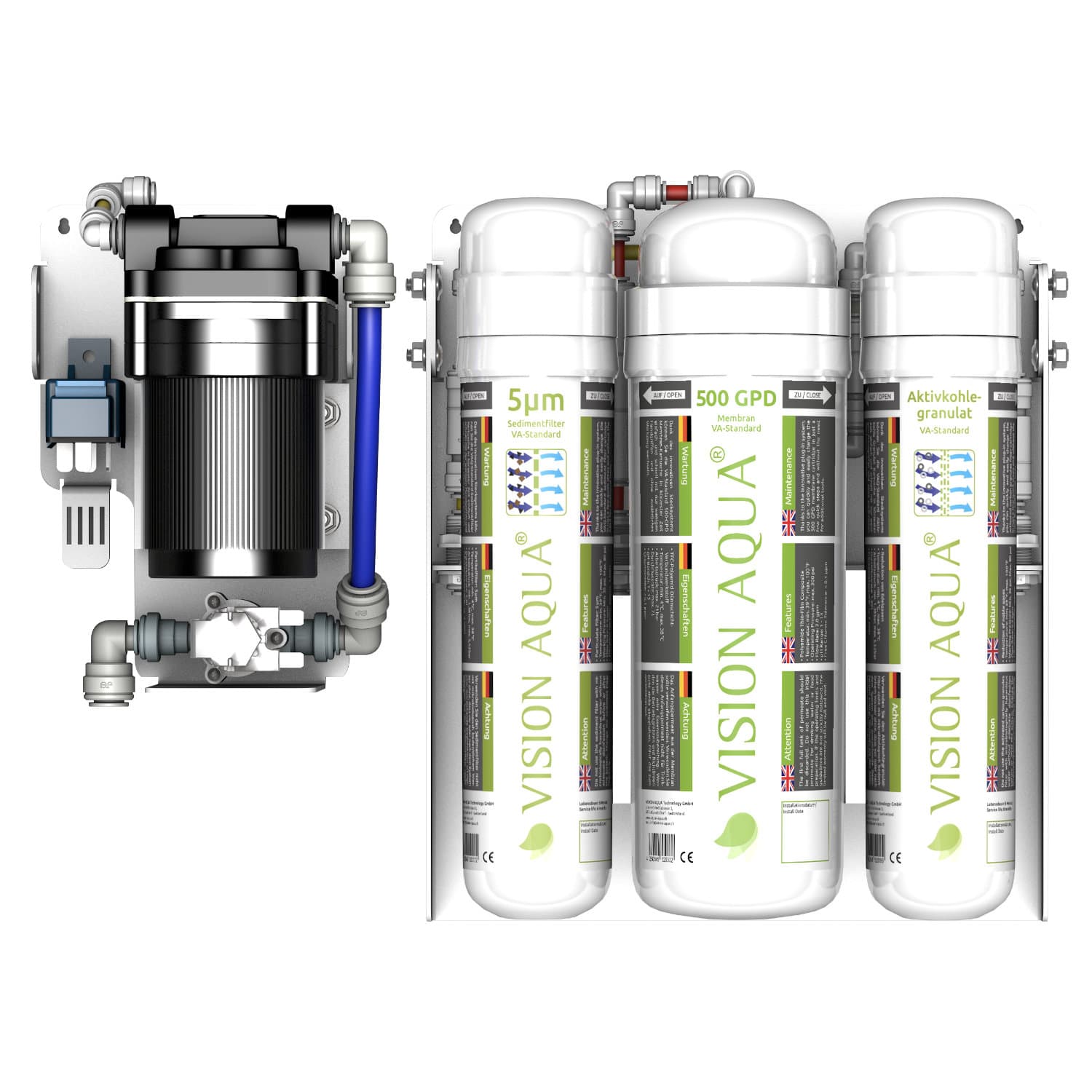
Scope of delivery:1 x VA Basic PLUS1 x VA-Standard - 500 GPD Membrane - Filmtec Material1 x VA-Standard - Sediment-Filter, PP cartridge (pre-filter)1 x VA Standard - Granulated Activated Carbon Filter, GAC Cartridge (post-filter)1 x Booster Pump 800 GPD - DirectDrive Brushles 24V - 2 x 3/8" tube outer diameter1 x Pressure switch - 1-10 Bar - 1/4" external thread - stainless-steel (incl. clamp for assembly)1 x installation set1 x 1-way tap, tap with straight connector - 1/4" tube external diameter (set)Hints!The system is delivered dry and has not been flushed!The system must first have produced 10-15 liters of water before it can be used for drinking water production.
Average rating of 5 out of 5 stars
Scope of delivery:1 x VA Basic PLUS1 x VA-Standard - 500 GPD Membrane - Filmtec Material1 x VA-Standard - Sediment-Filter, PP cartridge (pre-filter)1 x VA Standard - Granulated Activated Carbon Filter, GAC Cartridge (post-filter)1 x Booster Pump 800 GPD - DirectDrive Brushles 24V - 2 x 3/8" tube outer diameter1 x Pressure switch - 1-10 Bar - 1/4" external thread - stainless-steel (incl. clamp for assembly)1 x DC converter SD-100A-24 - 24V / 4.2A - Mean Well1 x installation set1 x 1-way tap, tap with straight connector - 1/4" tube external diameter (set)Hints!The system is delivered dry and has not been flushed!The system must first have produced 10-15 liters of water before it can be used for drinking water production.

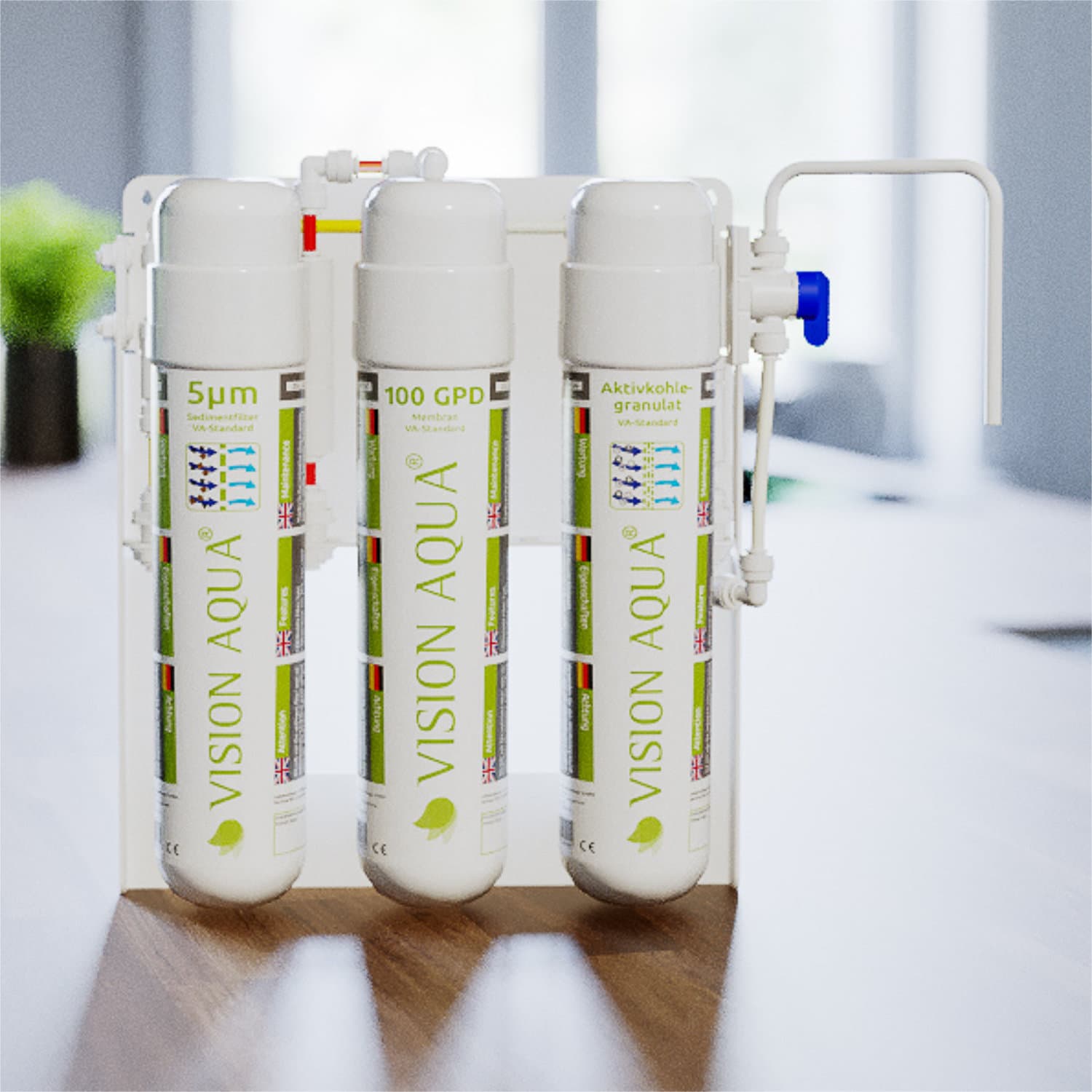
Scope of delivery:1 x VA Basic1 x VA-Standard - 100 GPD Membrane - Filmtec Material1 x VA-Standard - Sediment-Filter, PP cartridge1 x VA Standard - Granulated Activated Carbon Filter, GAC Cartridge1 x Plastic tube for inlet - 1/4", 6.35 mm - color: yellow - John Guest, length: 2 m1 x Plastic tube for waste water - 1/4", 6.35 mm - color: red - John Guest, length: 2 m1 x Tap connector adapter with aerator and return for wastewater - M22 inner thread to 1/41 x M24 AG to M22 AG long version - water filter faucet adapter1 x M24 AG to M22 AG - water filter faucet adapter1 x 1/4" tap with stainless steel folding spout3 x filter cap - suitable for VA standard filter cartridgeHints!The system is delivered dry and has not been flushed!The system must first have produced 10-15 liters of water before it can be used for drinking water production.
Weitere Blogbeiträge zum Thema Trinkwasser
Part 6 | Why the Future of Water Hygiene Does Not Necessarily Have to Be Chemical
Trinkwasserhygiene | Wasser wissen
Part 5 | Cavitation – When Physics Meets Microorganisms
Trinkwasserhygiene | Wasser wissen
Part 4 | Why Thermal Disinfection Does Not Always Achieve the Desired Effect
Trinkwasserhygiene | Wasser wissen
Bleiben Sie auf dem Laufenden!

